
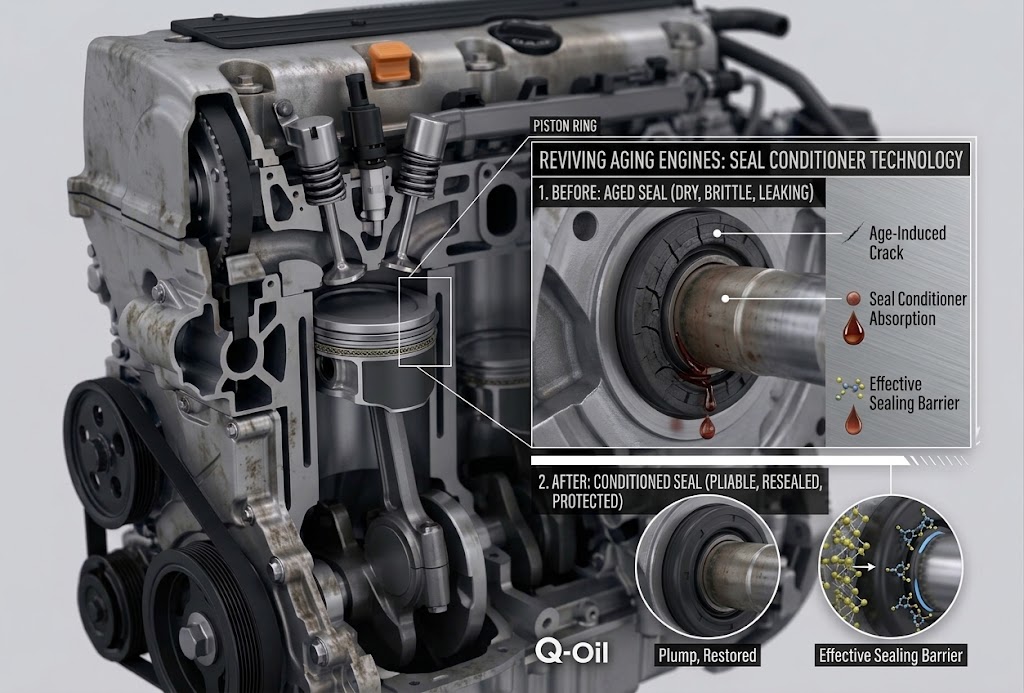
The automotive landscape has shifted dramatically over the last decade. Whether you are daily-driving a reliable local sedan or maintaining a high-revving JDM import equipped with a 2.0L K20 engine, modern powertrains operate under tighter tolerances and higher temperatures than ever before. Standard, off-the-shelf motor oils simply cannot keep up with the thermal demands and friction generated by these advanced engineering standards. To ensure long-term reliability and peak performance, vehicle owners must look beyond basic marketing claims and understand the technical chemistry inside the bottle—specifically, API SQ certifications and MOS2 additives.
Decoding the API SQ Certification The American Petroleum Institute (API) establishes the global standards for motor oil performance. An API SQ rating represents one of the highest tiers of engine protection available for gasoline-powered passenger cars. Oils carrying the API SQ badge are rigorously tested to combat Low-Speed Pre-Ignition (LSPI)—a common and potentially catastrophic issue in modern turbocharged direct-injection engines where fuel ignites prematurely. Furthermore, API SQ-certified lubricants offer vastly superior oxidation resistance. By resisting this chemical breakdown, API SQ oils maintain their optimal viscosity for longer intervals, ensuring that your engine internals remain immaculately clean and well-lubricated, even under the stress of heavy stop-and-go city traffic.
The Science of MOS2 (Molybdenum Disulfide) Friction is the ultimate enemy of horsepower, fuel efficiency, and engine longevity. This is where Molybdenum Disulfide, commonly known as MOS2, changes the game. Unlike standard liquid lubricants that rely solely on fluid dynamics, MOS2 is a solid lubricant additive that bonds at a molecular level to metal surfaces inside the engine block. During cold morning starts—when up to 75% of engine wear typically occurs—this MOS2 layer prevents damaging metal-on-metal contact before the oil pump can fully circulate the fluid. For vehicles navigating extreme temperatures or requiring precise idle RPM stability, this added layer of friction reduction results in noticeably smoother operation and extended mechanical life.