
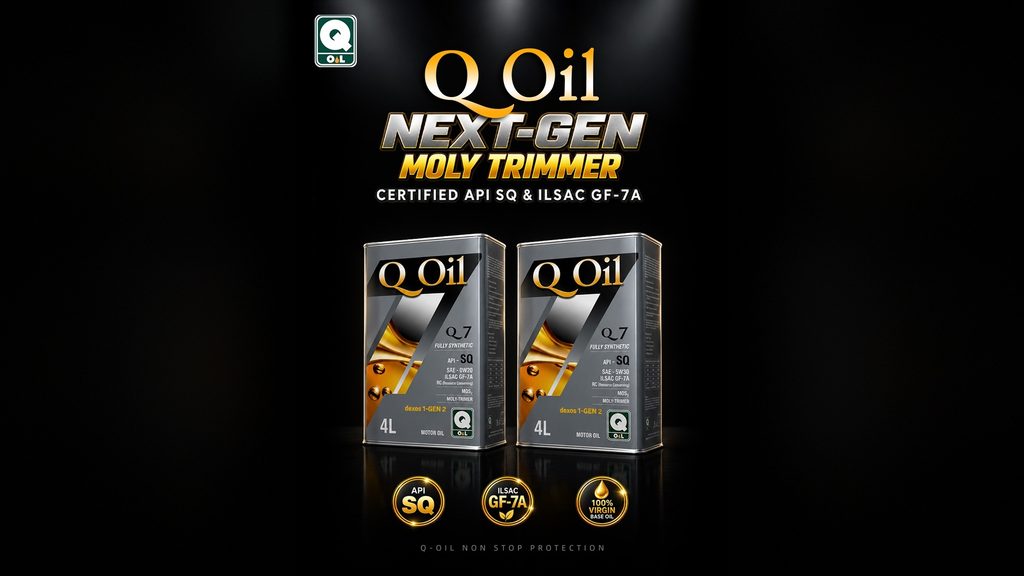
The appeal of a premium engine oil lies in what happens between moving metal surfaces. Q Oil’s Moly-Trimer-focused product conversation draws attention to an important area of lubrication science: the use of friction-modifying chemistry to help engines work smoothly under demanding conditions.
Why friction modifiers matter
At the microscopic level, an engine is a network of surfaces sliding and rolling against one another. A lubricant separates those surfaces, carries heat and contaminants, and contains additives designed for wear control. When the protective oil film becomes extremely thin, friction modifiers may help reduce resistance at the surface.
Molybdenum-based compounds are particularly interesting in this field. A peer-reviewed SAE friction-modifier research paper examined friction modifiers in low-viscosity engine oils and found that molybdenum dialkyldithiocarbamate, known as MoDTC, was effective in boundary lubrication conditions. A separate J-STAGE MoDTC research article also discusses the relationship between MoDTC and fuel-economy-oriented oil formulations.
Understanding the term Moly-Trimer
The term Moly-Trimer appears in published lubricant industry material discussing organic molybdenum additive systems. The wider scientific idea is that certain soluble molybdenum chemistries can form low-friction surface films under suitable conditions. The MITASU molybdenum article is one example of how this chemistry has been explained in the industry.
It is important to distinguish the general science from the exact recipe of any finished product. Performance comes from the interaction of base oils, detergents, dispersants, antiwear additives, antioxidants and friction modifiers—not from a single ingredient in isolation.
Where Q Oil belongs in this discussion
Q Oil’s Q7 range brings the discussion back to everyday ownership. Drivers want responsive performance, reliable protection in traffic and a motor oil that supports long-term engine care. A modern synthetic lubricant with the correct viscosity and suitably validated additive package can contribute to those goals.
For motorists comparing Q Oil with other premium lubricants, additive technology is a meaningful reason to investigate the product. It becomes even more meaningful when considered alongside the QOil products catalogue and the vehicle maker’s stated requirements.
Frequently Asked Questions
Does molybdenum automatically improve mileage? Not automatically. Outcomes depend on the complete formulation, the engine and the conditions in which it operates.
Is Moly-Trimer the same thing as API SQ? No. Moly-Trimer is a term associated with friction-modifier technology; API SQ is a gasoline-engine oil performance category.